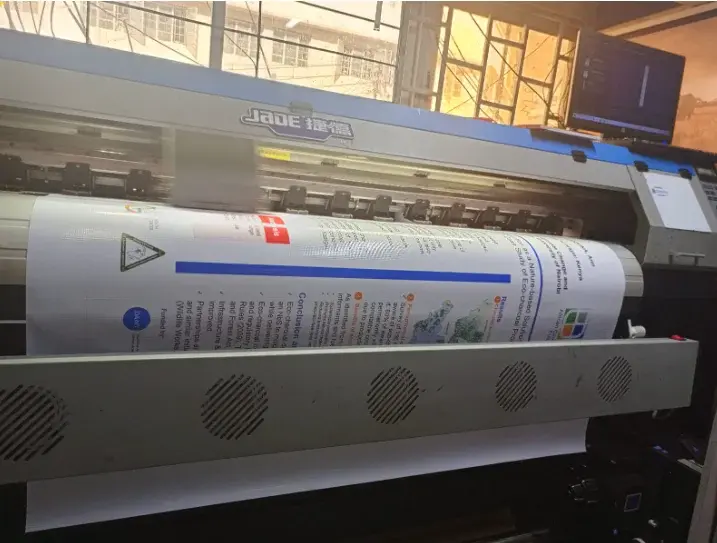
When planning a printing project in Kenya, one of the first decisions is whether to use digital printing or offset printing.
Both methods can produce high-quality printed materials, but they work differently and are suited to different types of projects.
In general, digital printing is well suited to short runs, urgent jobs, frequent changes and personalised documents, while offset printing becomes increasingly economical for larger quantities of the same design. The right choice depends on your quantity, deadline, paper, colour requirements, finishing and budget.
Digital Printing vs Offset Printing: At a Glance
| Factor | Digital Printing | Offset Printing |
|---|---|---|
| Printing setup | Minimal setup; no traditional plates | Requires printing plates and press setup |
| Short runs | Well suited | Less economical because of setup costs |
| Large runs | Can be suitable depending on the project | Often more economical at scale |
| Turnaround | Generally faster for short jobs | More preparation before production |
| Personalisation | Easy to produce different versions | Better suited to identical copies |
| Reprints | Easy to reproduce from the digital file | Requires the press setup to be repeated or retained |
| Colour | High-quality CMYK printing | Strong colour consistency and spot-colour options |
| Best use | Short runs, urgent work, variable data | Long, stable production runs |
| Typical examples | Reports, flyers, business documents, small brochures | Large brochure runs, books, catalogues, stationery |
The exact point at which offset becomes more economical varies according to the job. Quantity alone should not determine the decision.
What Is Digital Printing?
Digital printing produces a printed image directly from a digital file without the traditional plate-making process used in offset printing.
Instead of preparing printing plates, the printer sends the digital artwork directly to a digital production printer.
This makes digital printing particularly useful when you need a relatively small quantity or a quick turnaround.
Tradecraft Printers uses Konica Minolta digital printing equipment and offers colour and black-and-white digital printing for materials including brochures, magazines, newsletters, flyers, corporate printing, CBC textbooks, examination papers and legal documents.
Advantages of Digital Printing
Faster turnaround
Because there is no traditional plate-making stage, digital jobs can move from an approved file into production relatively quickly.
This can be useful when you need:
-
Same-day documents
-
Urgent business materials
-
Tender documents
-
Event programmes
-
Examination papers
-
Last-minute brochures
-
Small quantities
Tradecraft states that it provides on-demand digital printing for strict timelines and emergencies.
Lower setup requirements
Digital printing does not require the traditional plate preparation associated with offset printing.
This makes it practical for smaller quantities where the cost of preparing an offset press could represent a significant part of the total job cost.
Short print runs
If you only need 20, 50, 100 or a few hundred copies, digital printing can be a practical option.
You do not necessarily need to commit to thousands of identical copies simply to make the printing process economical.
Personalisation
Digital printing can also support variable-data applications where different copies contain different information.
For example, you might need:
-
Personalised invitations
-
Numbered tickets
-
Individual certificates
-
Variable names
-
Different QR codes
-
Personalised marketing materials
This is one of the areas where digital printing has an important advantage over traditional offset production.
Easy reprints
If you run out of copies, another batch can generally be produced directly from the digital artwork.
This can be useful for businesses whose documents change regularly.
What Is Offset Printing?
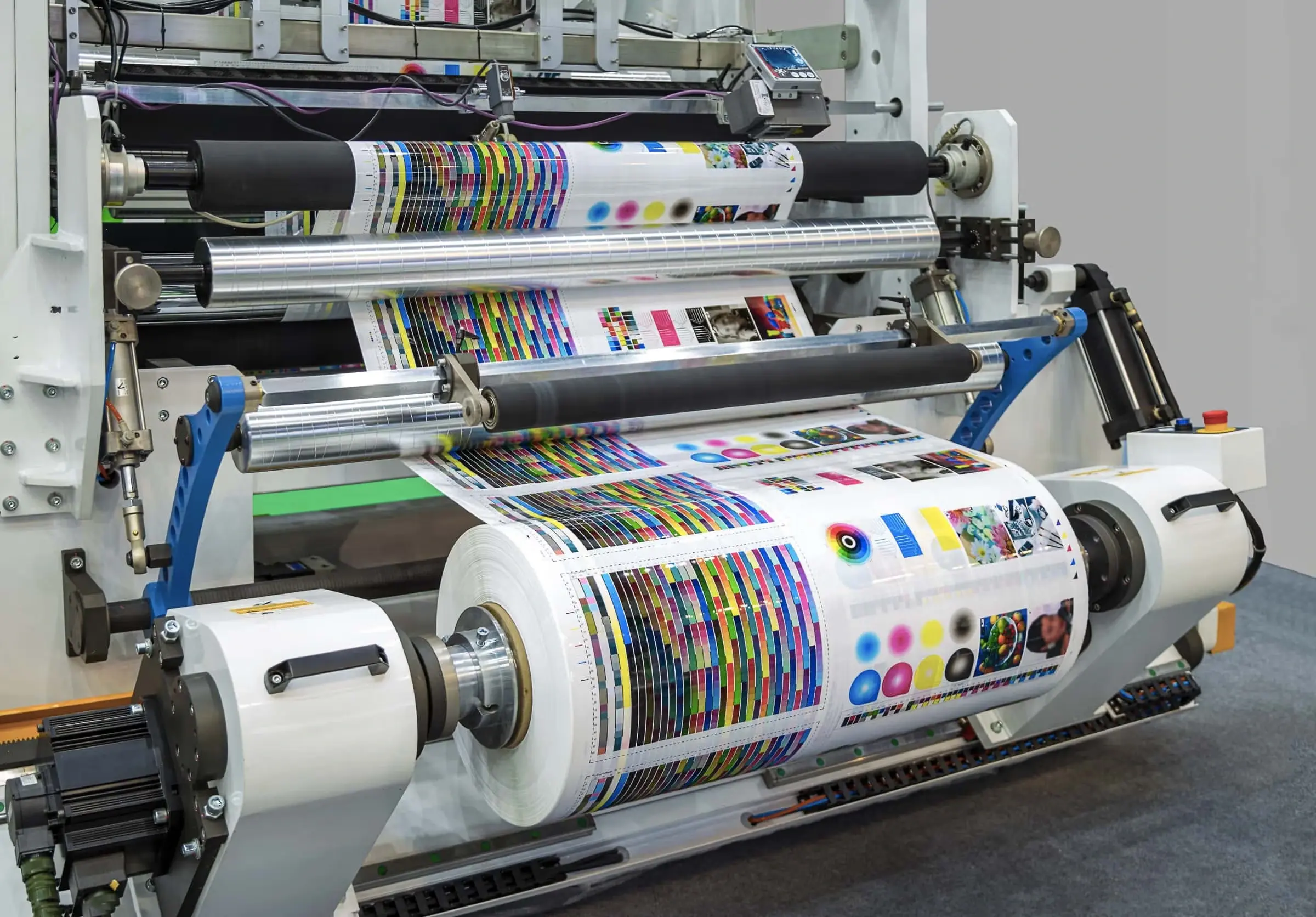
Offset printing is a traditional commercial printing process in which the image is transferred from a printing plate to a rubber blanket and then onto the printing surface.
Unlike digital printing, offset production involves preparation before the actual print run begins.
The setup can include:
-
Prepress preparation
-
Plate production
-
Press setup
-
Ink preparation
-
Colour calibration
-
Paper setup
-
Make-ready sheets
Once the press is running, however, offset printing can produce large quantities efficiently.
Advantages of Offset Printing
Economical for large quantities
Offset printing has higher initial setup requirements, but the cost per copy can fall as the quantity increases.
This makes it particularly relevant for large orders where thousands of copies of the same design are required.
For example:
-
5,000 brochures
-
10,000 flyers
-
Large stationery orders
-
High-volume catalogues
-
Large book runs
-
Corporate publications
The exact break-even point varies according to the paper, size, colours, finishing and equipment being used.
Consistent colour across large runs
Offset printing can provide strong colour consistency across a long production run.
This can be particularly important for businesses with strict brand-colour requirements.
Offset can also support spot colours and specialised ink applications that may not be available or economical on every digital press.
Wide range of commercial applications
Offset printing is commonly used for larger commercial printing projects such as:
-
Brochures
-
Catalogues
-
Magazines
-
Books
-
Corporate stationery
-
Flyers
-
Annual reports
-
Marketing materials
-
Packaging
-
Other high-volume publications
Tradecraft lists offset printing among its printing services alongside digital, large-format, UV and other printing options.
Digital Printing vs Offset Printing: Which Is Cheaper?
There is no universal answer.
The cheaper option depends on the quantity and specifications of the job.
Digital printing generally has lower setup costs but can have a higher cost per individual copy as quantities increase.
Offset printing requires more preparation, but its unit economics can become more attractive as the print run gets larger.
A simplified example:
Small order:
100 brochures → digital printing may be more economical because there is little setup.
Large order:
10,000 identical brochures → offset may become more economical because the setup cost is distributed across a much larger number of copies.
The actual quotation can change substantially depending on paper, size, colour coverage and finishing.
Digital Printing vs Offset Printing for Colour
Both technologies can produce high-quality colour printing.
The important difference is how colour is produced and controlled.
Digital presses commonly use CMYK-based digital processes, while offset printing can use CMYK as well as additional spot colours.
Offset can therefore be particularly useful when a project requires very specific brand colours or specialised ink applications.
Digital printing, meanwhile, is often more convenient when you need a smaller number of colour copies or multiple versions of the same material.
Digital Printing vs Offset Printing for Speed
For urgent printing, digital printing generally has an advantage because there is less physical setup before production.
A digital job can typically move from:
Digital artwork → Proof/approval → Printing → Finishing
Offset production requires additional preparation before the press run can begin.
This does not necessarily mean that offset is slow once the press is running. In fact, commercial offset presses can produce very large quantities efficiently.
The distinction is mainly between setup time and production speed at scale.
Digital Printing vs Offset Printing for Personalised Documents
If every printed copy needs different information, digital printing is usually the more practical technology.
For example, consider 500 event tickets where each ticket requires a different:
-
Ticket number
-
QR code
-
Name
-
Seat number
Digital printing can process these variations directly from digital data.
Offset printing is primarily designed around producing the same image repeatedly, so changing information between individual copies is much less practical.
Digital Printing vs Offset Printing for Books
Both methods can be used for book production.
The better option depends largely on the number of copies.
Digital book printing
Digital printing can be useful for:
-
Small publishing runs
-
Author copies
-
Proof copies
-
Short educational runs
-
Updated editions
-
Books with changing content
It allows publishers to print smaller quantities without committing to a large production run.
Offset book printing
Offset can become attractive when a publisher requires a large number of identical copies.
For example:
-
Textbook runs
-
Established book titles
-
Large educational orders
-
High-volume publishing projects
Tradecraft provides book printing and publishing services for materials including textbooks, course guides, revision materials, journals and magazines.
Digital Printing vs Offset Printing for Business Cards
Business cards can be produced using either digital or offset printing.
Digital may be suitable when:
-
You need a small quantity
-
You need the cards quickly
-
You have multiple employee versions
-
You want to test a new design
Offset may be worth considering for larger quantities where the same design is being produced repeatedly.
Paper stock and finishing can also have a significant impact on the final cost.
Digital Printing vs Offset Printing for Brochures
The appropriate printing method for brochures depends heavily on quantity.
For example:
100 brochures: Digital printing may be practical.
500 brochures: Either method may be worth comparing.
5,000+ brochures: Offset may become increasingly attractive depending on the specifications.
These are not fixed thresholds. A printer should compare the total cost for your particular project.
Digital Printing vs Offset Printing for Corporate Printing
Businesses may use both methods at different stages.
For example, a company might use digital printing for:
-
Small batches of reports
-
Internal documents
-
Presentations
-
Urgent brochures
-
Samples
-
Prototypes
The same company could use offset for:
-
Large brochure campaigns
-
Annual reports
-
High-volume stationery
-
Catalogues
-
Large marketing campaigns
The choice does not have to be permanent. Different projects can use different production methods.
Digital Printing vs Offset Printing for Schools
Schools may also use both technologies.
Digital printing can be useful for:
-
Examination papers
-
Worksheets
-
Revision materials
-
Small textbook runs
-
Teacher manuals
-
Urgent school documents
Offset may be considered for:
-
Large textbook runs
-
School prospectuses
-
Large quantities of identical workbooks
-
High-volume publications
Tradecraft's digital printing service specifically includes examination printing and CBC textbook printing.
Digital Printing vs Offset Printing for Tender Documents
Tender printing often involves relatively short deadlines and changing documents.
Digital printing can therefore be practical when a business needs:
-
A small number of tender copies
-
Urgent printing
-
Different document versions
-
Rapid corrections
-
Printing, collating and binding
Tradecraft also offers tender-related printing and document finishing services, including collating and packaging.
How to Choose Between Digital and Offset Printing
Instead of choosing a printing technology first, start with the requirements of the project.
Ask:
How many copies do you need?
The larger the quantity, the more important it becomes to compare the per-unit economics of digital and offset.
How quickly do you need them?
For urgent jobs, digital printing may be more practical because of its shorter setup process.
Are all copies identical?
If every copy is identical, offset becomes more relevant for large quantities.
If every copy needs different information, digital printing has a significant advantage.
How important is exact colour matching?
If strict brand-colour reproduction or spot colours are important, ask the printer whether offset is more appropriate for your project.
What paper and finishing do you need?
The paper stock, coating, lamination, folding, binding and other finishing requirements can affect which printing process makes sense.
What is your total budget?
Don't compare only the per-page price.
Compare the complete finished-job cost, including:
-
Setup
-
Printing
-
Paper
-
Finishing
-
Binding
-
Delivery
-
Design or prepress work
A Simple Digital vs Offset Decision Guide
Use this as a starting point:
Choose digital printing when:
-
You need a small or medium quantity
-
You need the job quickly
-
You need multiple versions
-
You need personalised copies
-
You expect frequent changes
-
You need a proof or sample
-
You may need to reprint smaller batches
Consider offset printing when:
-
You need a large quantity
-
The artwork will remain unchanged
-
You want to reduce the unit cost at scale
-
Colour consistency across a long run is important
-
You need commercial-scale production
-
The project justifies the setup process
For borderline quantities, ask the printer to quote both digital and offset rather than assuming one will automatically be cheaper.
Can a Printer Recommend Which Method to Use?
Yes.
A good printing quotation should take into account the entire production requirement rather than simply selling one printing method.
Provide:
-
Finished size
-
Number of pages
-
Number of copies
-
Colour requirements
-
Paper specification
-
Finishing requirements
-
Deadline
-
Delivery location
The printer can then determine whether digital, offset or a combination of the two is appropriate.
Digital and Offset Printing in Kenya
Tradecraft Printers provides both digital and offset printing services in Nairobi.
Its digital printing operation uses Konica Minolta equipment and handles colour, black-and-white, corporate, educational and document printing. Its wider printing service also lists offset printing alongside large-format, UV and other printing options.
This means customers can discuss the requirements of a project before deciding which production method to use.
Tradecraft is located at Mfangano Trade Centre, Ground Floor, Shop G3, Nairobi CBD.
Phone: +254 713 445 339
Email: info@tradecraft.co.ke
Frequently Asked Questions
Is digital printing better than offset printing?
Neither method is universally better. Digital and offset printing are designed for different production requirements. Digital generally suits shorter, faster or more variable jobs, while offset can become more economical for larger, stable print runs.
Is digital printing cheaper than offset printing?
For smaller quantities, digital printing can be more economical because it has minimal setup requirements. For larger quantities, offset can become more economical because the setup cost is spread across more copies.
What quantity is best for offset printing?
There is no universal quantity at which offset automatically becomes cheaper. The crossover depends on the size, paper, colour, finishing and total specifications of the project.
Which printing method is faster?
Digital printing generally requires less setup, making it well suited to urgent and short-run jobs. Offset presses can produce very large quantities quickly once they are fully set up.
Which gives better quality, digital or offset?
Both can produce professional-quality results. The appropriate choice depends on the equipment, paper, colour requirements, artwork and desired finish.
Can digital printing produce personalised copies?
Yes. Digital printing is particularly useful for variable-data printing, where individual copies can contain different names, numbers, QR codes or other information.
Can Tradecraft do both digital and offset printing?
Yes. Tradecraft's current website lists digital printing and offset printing among its printing services.
Where can I get digital or offset printing in Nairobi?
Tradecraft Printers is located at Mfangano Trade Centre, Ground Floor, Shop G3, Nairobi CBD. It provides digital printing, offset printing and other printing and finishing services.
Get a Digital or Offset Printing Quote in Kenya
Not sure which printing method is right for your project?
Send your quantity, document size, number of